How the Twitch Algorithm Actually Works in 2026 (And Why Chat Engagement Is Your Cheat Code)

Stop Guessing, Start Understanding
There's a pervasive myth in the streaming community that the Twitch algorithm is some unknowable black box that arbitrarily decides who succeeds. That leads to a lot of frustration and a lot of bad strategy, streamers grinding more hours, chasing trending games, or buying viewers in a desperate attempt to game a system they don't understand.
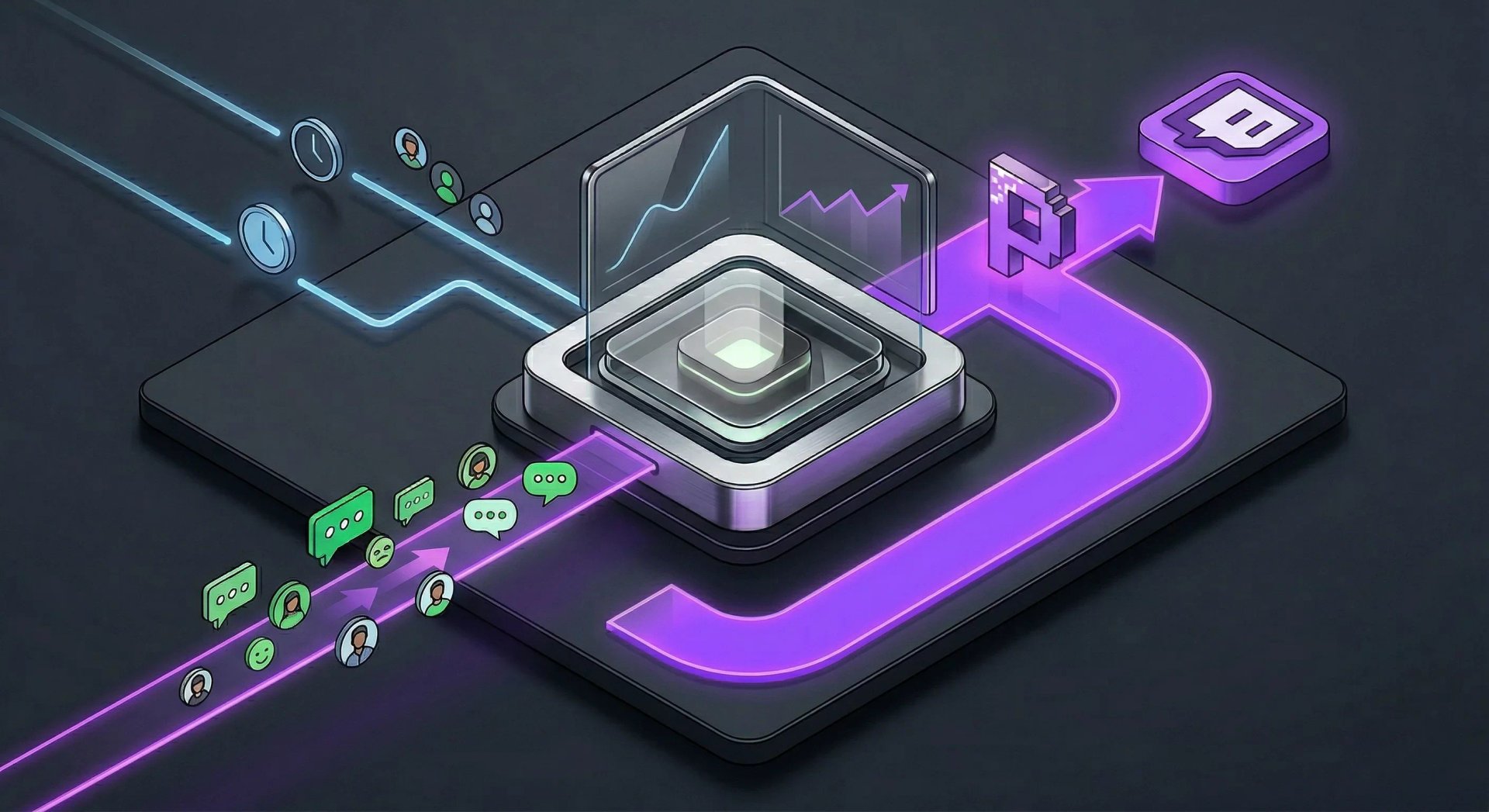
The reality is simpler. The Twitch algorithm is a recommendation engine. Its job is to match viewers with streams they're likely to enjoy and stick with. It uses real-time data signals, and those signals are knowable, measurable, and influenceable.
The Signals That Actually Matter
Twitch doesn't publish its algorithm publicly, but through platform updates, creator insights, and observable patterns, we have a clear picture of what the recommendation system weighs most heavily in 2026.
1. Viewer Retention (The Foundation)
This is the single most important metric. How long do viewers stay once they click on your stream? If people click in and leave within 15 seconds, the algorithm reads that as a negative signal and your ranking drops, in real time, during the live stream. If viewers stick around for minutes or longer, the system reads that as a quality signal and boosts your visibility.
What this means practically: your first impression matters enormously. The first 30 seconds of a viewer's experience determines whether the algorithm works for you or against you.
2. Chat Activity (The Growth Lever)
The algorithm tracks how interactive your stream is, how many messages are being sent, how many unique chatters are participating, and the ratio of engagement to total viewers.
Here's the critical insight: a stream with 30 viewers and active chat will rank higher than a stream with 100 viewers and silent chat. The algorithm interprets high chat activity as a signal that viewers are invested and the content is compelling. It's not counting viewers, it's measuring engagement quality.
3. Follower Loyalty and Return Viewers
Twitch tracks whether your followers actually come back to watch you. A large follower count with low return viewership is a weaker signal than a smaller following with high loyalty. Converting followers into regulars matters more than accumulating followers in the first place.
4. Streaming Consistency
The algorithm rewards predictable behaviour. Frequent, scheduled streams help Twitch understand what to expect from your channel, and that predictability translates into more confident recommendations. Whatever schedule you commit to, stick to it, the algorithm learns your pattern and surfaces you accordingly.
5. Community Interactions (Raids, Co-Streams, Clips)
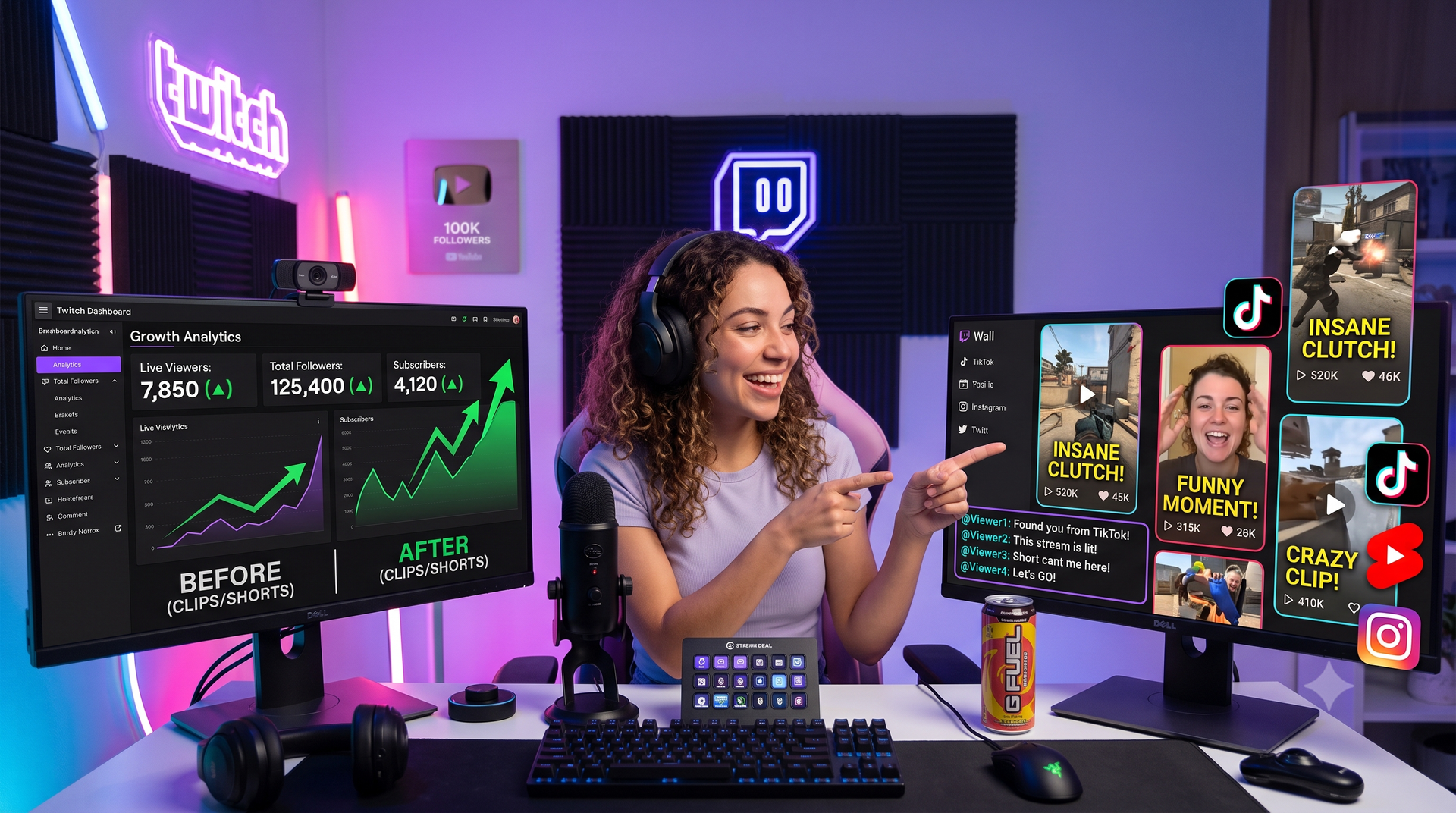
When you raid other streamers, co-stream with creators in your category, or generate clips that circulate on the platform, Twitch notices. In the 2025-2026 algorithm update, external discovery signals also began factoring in. Clips that perform well on TikTok, YouTube Shorts, and Instagram Reels are now indexed as positive signals that feed back into your Twitch visibility.
6. Real-Time Adjustments
The algorithm doesn't set your ranking once and leave it. It adjusts throughout your stream. If engagement surges mid-stream (a popular moment, a raid arrives, chat explodes), your visibility increases in real time. This means every stream has multiple opportunities to improve your position, a slow start doesn't doom you.
The Engagement Equation: Why Chat Is Your Cheat Code
When you look at all six signals together, a pattern emerges:
- Viewer retention is influenced by whether your stream feels lively and interactive
- Chat activity is a direct ranking factor
- Follower loyalty is built through personal connections in chat
- Consistency keeps you in the algorithm's good graces
- Community interactions generate cross-pollination
- Real-time adjustments reward engagement spikes
Chat engagement touches every single one of these factors. It's the common thread.
How to Actually Improve Your Chat Engagement
Reduce Viewer Drop-Off in the First 30 Seconds
Your stream needs to immediately signal that something interesting is happening. This means having audio on (a silent stream is an instant exit), displaying an engaging scene, and ideally having visible chat activity. If a new viewer sees text scrolling in chat, they perceive the stream as active and are more likely to stay.
Ask Questions Constantly
The simplest and most effective engagement tactic is asking your audience questions that require a response. "Chat, should I go left or right?" "What's your hot take on this patch?" Every question is an invitation that lowers the barrier to typing that first message.
Acknowledge Every Chatter
In small and mid-size streams, using someone's name when they chat has an outsized impact. "Good call, Sarah" or "Welcome back, Mike, last time you were here we were arguing about that boss fight." This creates a recognition loop: the viewer feels valued, chats more, and becomes a regular.
Use Tools That Maintain Engagement When You Can't
Here's the practical reality: you can't personally maintain maximum chat engagement while also playing well, managing your production, and keeping your energy up for a 3-4 hour stream. This is where AI-powered tools start making sense, not as a gimmick, but as a strategic layer. Tools that can greet newcomers, maintain conversation during intense gameplay, and respond to chatters contextually keep the engagement signals flowing even when your attention is elsewhere.
The Meta-Strategy: Think in Systems, Not Moments
The biggest mistake streamers make with the algorithm is thinking stream-by-stream. That's not how the system works.
The algorithm builds a profile of your channel over time. Consistent engagement across many streams creates momentum that compounds. Think of the algorithm as a relationship, it's learning your channel's patterns, your audience's behaviour, and your content's engagement profile. The more consistent positive signals you send, the more confidently it recommends you.
Your job is to build a system that produces those signals reliably: a consistent schedule, engagement tools, community habits, and content that makes people want to interact, not just watch.
The Bottom Line
The Twitch algorithm in 2026 rewards engagement, consistency, and community, the same things that make streaming enjoyable in the first place. The streamers who understand this stop chasing viral moments and start building engagement infrastructure.
Chat engagement isn't just a "nice to have", it's the input that the entire recommendation system is built around. Optimise for it, and you're optimising for everything else at the same time.
Ready to put this into practice? Start with our guide on fixing dead chat on Twitch, or explore the AI tools that can help keep your engagement signals strong.